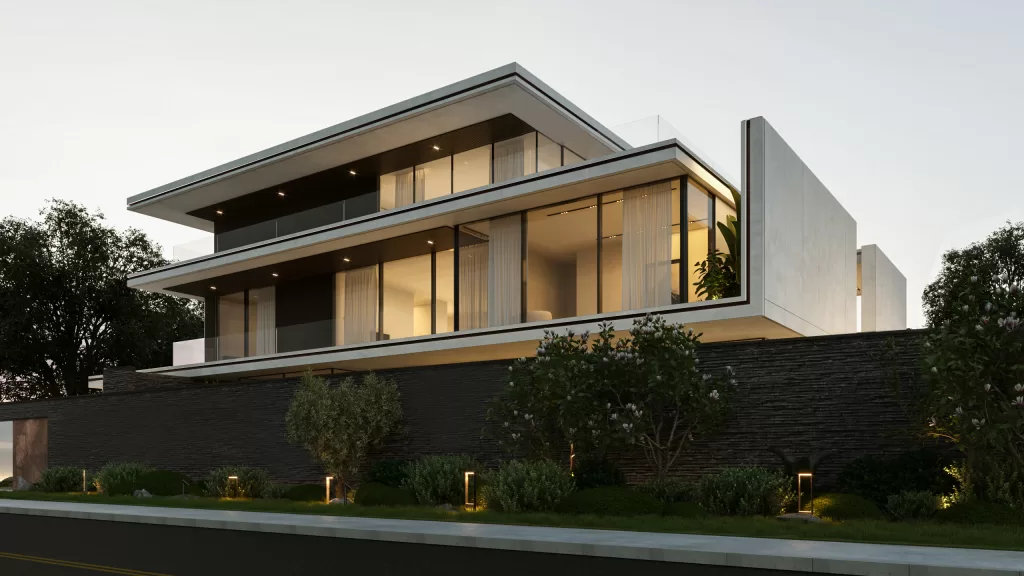
smart home technology UAE is reshaping how architects design homes across the Emirates. From luxury villas on the Palm to compact high-rise apartments in downtown Dubai, home automation and integrated systems are no longer optional extras — they are design drivers. As clients expect seamless digital experiences, architects must balance aesthetics, performance, and privacy while future-proofing buildings for rapidly evolving technologies. This article explores how smart architecture UAE is changing spatial planning, engineering coordination, user experience, and sustainability in residential design.
What “smart” means for architecture
At its simplest, home automation architecture Dubai describes buildings where lighting, climate, security, audio-visual systems, and appliances are connected and coordinated through central control platforms. But for architects the implications run deeper: smart homes demand intentional infrastructure (networks, conduits, service voids), spatial design for control hubs and equipment, and an integrated strategy so technology enhances — not disrupts — architecture.
Embedding technology into the design process
Smart-enabled projects succeed when technology is considered from briefing through construction. Architects in the UAE increasingly specify:
- Dedicated plant and equipment rooms with ventilation and access for AV racks, UPS, and home-server hardware.
- Concealed wiring routes, centralised conduits, and ceiling voids for sensors, speakers, and lighting.
- Flexible wiring and modular junction boxes to allow future upgrades without invasive work.
- Strong and redundant data networks (Ethernet backbone + Wi-Fi planning) to support IoT density and low latency for real-time control.
This infrastructural thinking affects floor plans, ceiling heights, and façade choices — for example, planning for motorised shading and integrated photovoltaic arrays that interact with building control systems.
Designing for occupant experience and accessibility
Smart architecture UAE places user experience at the center. Architects collaborate with integrators and UX designers to create intuitive control points: wall panels, smartphone apps, voice control or simple physical overrides for non-technical occupants. Accessibility is a major benefit — automated doors, adjustable lighting scenes, and voice-activated routines make homes more inclusive for residents with limited mobility or older adults.
Energy efficiency and sustainability gains
One of the most compelling drivers of green smart architecture is energy optimisation. Home automation enables:
- Dynamic HVAC control that adjusts to occupancy and weather forecasts.
- Lighting scenes and daylight harvesting that reduce electricity use.
- Smart shading that limits solar heat gain, lowering cooling loads — critical in Dubai’s climate.
- Integration with on-site renewables and battery storage for load balancing and grid interaction.
When paired with energy-monitoring dashboards, these systems help homeowners understand consumption patterns and make greener choices — aligning smart home technology UAE with wider sustainability goals.
Security, privacy, and resilience
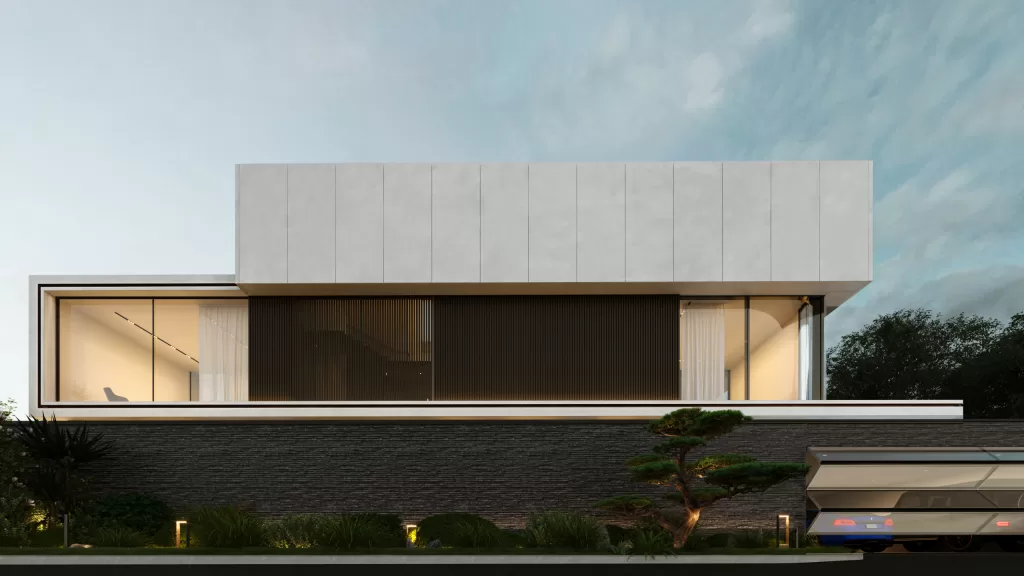
Security systems are a core part of home automation: access control, CCTV, alarm monitoring, and remote lock management. However, architects must also account for cybersecurity and data privacy. Design strategies include physical segregation of critical systems, secure server enclosures, and collaboration with integrators to enforce encrypted communications and regular firmware updates. Resilience planning — such as UPS backup for critical devices and fallback manual controls — ensures that homes remain safe and usable when networks fail.
Challenges: interoperability, obsolescence, and cost
Despite the benefits, smart architecture faces practical hurdles in the UAE market:
- Interoperability: The IoT ecosystem is fragmented. Architects should favour open standards (e.g., Matter, BACnet, open APIs) and choose systems that support multiple protocols to reduce lock-in.
- Obsolescence: Technology evolves quickly. Designing with modularity and retrofitability in mind avoids expensive rewiring or demolition later.
- Cost and skill gaps: High-end automation can be costly and requires skilled contractors for installation and commissioning. Early budgeting and procurement strategies are essential to align client expectations with reality.
The role of data and digital twins
Advanced projects are turning to data to improve design and operation. Architects use digital twins and building information models that feed into smart systems, enabling predictive maintenance, energy modelling, and scenario testing (for example, how shading strategies or occupancy schedules affect comfort and energy). This data-driven approach improves long-term performance and supports evidence-based design decisions.
How smart tech is shaping typologies in the UAE
Different housing types adopt smart features in distinct ways:
- Luxury villas: Full home automation with integrated pools, landscape lighting, private cinemas, and bespoke wellness systems. These projects prioritise hidden tech and high-grade audiovisual integration.
- High-rise apartments: Focus on resilient connectivity, centralized building services, and community dashboards for shared amenities.
- Gated communities / masterplans: Neighborhood-level systems such as connected EV charging, microgrids, and centralized security create coordinated smart living ecosystems across many homes.
Practical guidelines for architects
To design successful smart homes in the UAE, architects should:
- Start early: Specify technology requirements in the concept and schematic stages.
- Collaborate: Involve AV/IT integrators, MEP engineers, and cybersecurity specialists in the core design team.
- Design for change: Use modular conduit systems, accessible equipment rooms, and surface-mount options where future retrofits may be required.
- Prioritise UX: Keep controls simple and provide clear manual overrides.
- Plan for maintenance: Specify access, ventilation, and service clearances for equipment racks and batteries.
- Choose open standards: Reduce vendor lock-in and increase longevity.
The future: AI, edge computing, and ambient intelligence
Looking ahead, smart home technology UAE will be shaped by AI, edge computing, and faster networks (5G and beyond). Homes will anticipate needs — adjusting climate and lighting proactively, detecting health patterns, and personalizing environments across occupants. Edge processing will keep latency low and privacy higher by keeping sensitive data on-site. For architects, this means designing adaptable, sensor-rich spaces that can host increasingly subtle and personalized services.
Conclusion
Smart home technology UAE is transforming architecture from a static shell into an adaptive platform for living. In Dubai and across the Emirates, architects who embrace this shift — integrating infrastructure, prioritizing user experience, and planning for longevity — will deliver homes that are resilient, efficient, and delightful to inhabit. As technology matures, smart architecture UAE will not simply add convenience; it will redefine comfort, sustainability, and the very relationship between people and the spaces they live in.