
Home Colour Design Outside plays a key role in enhancing curb appeal, architectural style, and the overall visual impact of any residence
The exterior color of a home is one of the most influential elements in architectural design. It shapes first impressions, reflects personal taste, and enhances the harmony between the building and its surroundings. A well-planned Home Colour Design Outside can elevate a property’s appearance, increase its market value, and create a welcoming atmosphere.
Choosing the right exterior colors requires more than personal preference. Climate, architectural style, lighting, materials, and landscaping all play important roles in determining which colors will perform and look best over time.
Why Exterior Color Design Matters

Exterior colors define the character of a home and highlight its architectural features. A thoughtful color scheme can:
- Enhance curb appeal
- Emphasize design details
- Create visual balance
- Improve neighborhood harmony
- Increase property value
Homes with well-executed exterior house color ideas often stand out without appearing overpowering or outdated.
Understanding Architectural Style and Color Selection
Every architectural style responds differently to color. Choosing shades that complement the structure ensures a cohesive appearance.
Common Style-Based Approaches:
- Modern homes: Neutral tones with strong contrast
- Traditional homes: Warm, classic colors
- Mediterranean designs: Earthy hues and textured finishes
- Minimalist architecture: Monochromatic or two-tone palettes
Aligning color choices with architectural intent is essential for a timeless look.
Popular Modern Exterior Color Schemes
Today’s trends focus on simplicity, contrast, and natural inspiration. Modern exterior color schemes often include:
- White with charcoal or black accents
- Soft gray paired with natural wood tones
- Beige combined with stone textures
- Earth tones inspired by nature
These combinations create a clean, elegant appearance while maintaining long-term appeal.
The Role of Light and Climate in Exterior Colors
Sunlight and climate significantly influence how colors appear on exterior surfaces. Bright sunlight can intensify colors, while shaded areas may soften them.
Key considerations include:
- Light colors reflect heat and suit warm climates
- Dark colors absorb heat and add depth
- Matte finishes reduce glare
- UV-resistant paints prevent fading
Selecting climate-appropriate colors improves durability and comfort.
Using Contrast to Highlight Architectural Features
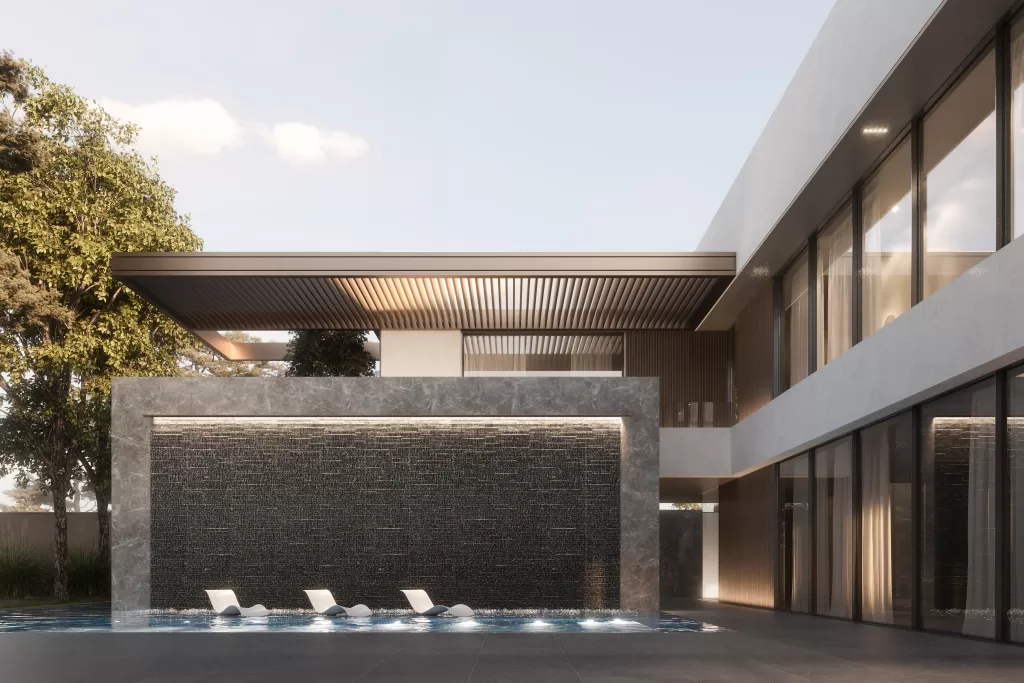
Contrast is a powerful design tool in house facade color design. It allows architectural details to stand out clearly.
Common contrast techniques include:
- Dark window frames against light walls
- Accent colors for entrances
- Differentiated tones for upper and lower levels
- Textured materials paired with solid colors
- This approach adds depth without overwhelming the overall design.
Outdoor Home Paint Combinations That Work
Successful outdoor home paint combinations are balanced and intentional. Most designers recommend limiting exterior palettes to three main colors:
- Primary color for walls
- Secondary color for architectural elements
- Accent color for doors or details
This keeps the design clean and visually cohesive.
Landscaping and Exterior Color Harmony
Exterior colors should complement landscaping rather than compete with it. Greenery, stone, and pathways influence how colors are perceived.
Tips for harmony include:
- Neutral walls to balance vibrant plants
- Earth tones for natural landscapes
- Soft contrasts near garden areas
- When colors and landscaping work together, the result feels natural and inviting.
Common Mistakes to Avoid
When planning exterior color design, avoid these common errors:
- Using too many colors
- Ignoring surrounding buildings
- Choosing trendy colors without longevity
- Forgetting about maintenance needs
A strategic approach ensures long-lasting results.
Frequently Asked Questions -FAQ
- How many colors should be used for a home exterior?
Most professionals recommend two to three colors to maintain balance and elegance.
- Do exterior colors affect property value?
Yes, a well-chosen color palette can significantly improve curb appeal and resale value.
- Are neutral colors better for exteriors?
Neutral tones are versatile, timeless, and suitable for most architectural styles and climates.
- Can exterior colors be customized?
Absolutely. Colors can be tailored to personal taste while respecting architectural and environmental factors.
Conclusion
A successful Home Colour Design Outside combines aesthetics, function, and context. By understanding architectural style, climate, lighting, and material interaction, homeowners can create an exterior that is both visually appealing and durable.
Whether you prefer modern simplicity or classic elegance, thoughtful exterior color planning ensures your home remains attractive, welcoming, and timeless for years to come.